Introduction to MIFARE Cards
Contactless smart cards have become an essential part of modern identification, access control, time attendance, public transportation, hospitality, and visitor management systems. Among the widely recognized contactless card technologies, MIFARE cards are used in a variety of applications where users need to identify themselves or interact with compatible electronic readers simply by tapping a card.
MIFARE is a contactless smart card technology family developed by NXP Semiconductors. These cards communicate wirelessly with compatible readers, allowing information to be exchanged without inserting the card into a physical slot or making direct electrical contact.
MIFARE cards are available in different versions, including MIFARE Classic, MIFARE DESFire, and MIFARE Ultralight. Although these card families may look similar externally, their memory organization, security capabilities, and intended applications can differ significantly.
WIDENET ME supplies MIFARE cards and RFID identification solutions for businesses, system integrators, distributors, and organizations across the UAE and wider Middle East and Africa markets.
What Is a MIFARE Card?
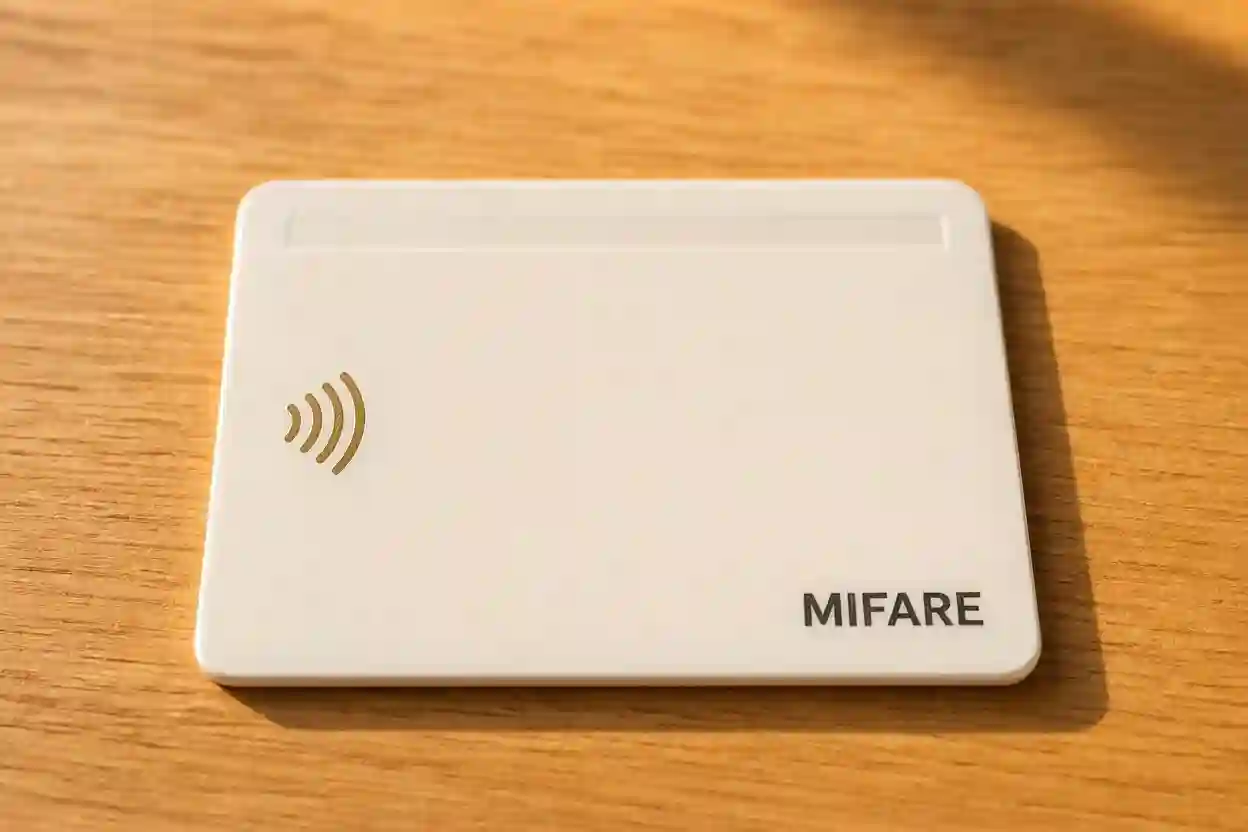
A MIFARE card is a contactless smart card containing an integrated circuit and an antenna embedded inside its body. When the card is brought near a compatible reader, the reader’s electromagnetic field powers the chip and enables wireless communication.
Most commonly encountered MIFARE cards operate at 13.56 MHz and use the ISO/IEC 14443 contactless card standard, although the exact protocol capabilities depend on the particular product.
A typical MIFARE PVC card consists of the following components:
- Integrated circuit: Stores the card’s identifier and, depending on the model, data and security information.
- Embedded antenna: Enables communication and energy transfer between the reader and the card.
- PVC or other card body: Protects the internal electronic components.
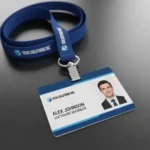
- Printed surface: Can display a company logo, employee photograph, card number, barcode, QR code, or other identification information.
Unlike a magnetic-stripe card, a contactless MIFARE card does not need to be swiped through a reader. The user simply presents the card within the reader’s supported operating range.
The actual communication distance depends on the card antenna, reader design, installation conditions, and surrounding materials.
How Do MIFARE Cards Work?
MIFARE cards use radio-frequency communication to exchange information with compatible readers. The process generally follows these steps.
1. Reader activation: The contactless reader generates an electromagnetic field.
2. Card detection: When a compatible MIFARE card enters the field, its antenna receives energy and the chip becomes operational.
3. Card selection: The reader detects and selects the card according to the supported contactless protocol.
4. Identification and authentication: The reader or connected system obtains the card identifier and, where supported and required, performs authentication using the appropriate security protocol and keys.
5. Access or transaction processing: The access control panel, attendance software, ticketing system, or other application determines whether the card should be accepted.
6. System response: Depending on the application, a door may unlock, an attendance event may be recorded, a ticket may be validated, or another authorized transaction may take place.
An important technical distinction is that reading a card’s serial number is not the same as authenticating protected information stored on the chip. The security of the complete system depends on the card technology, reader, key management, application design, and controller configuration.
Main Types of MIFARE Cards
Different MIFARE families are designed for different requirements. Choosing the correct type is important because not every MIFARE card is compatible with every reader or application.
1. MIFARE Classic 1K Cards
MIFARE Classic 1K is a widely deployed contactless card type found in legacy access control, attendance, and identification installations.
The card provides 1 KB of nominal EEPROM memory, organized into 16 sectors, with each sector containing four 16-byte blocks. Some memory is reserved for sector trailers and control information, so not all nominal memory is available for application data.
MIFARE Classic cards support sector-based access control using their legacy Crypto1 security mechanism. However, this mechanism has known security weaknesses, and the original MIFARE Classic family is not recommended by NXP for new designs.
Typical applications: Existing compatible access control systems, legacy attendance installations, and other applications where the installed infrastructure specifically requires MIFARE Classic.
2. MIFARE Classic 4K Cards
MIFARE Classic 4K provides 4 KB of nominal memory, giving compatible applications more storage capacity than the 1K version.
Its memory is divided into 40 sectors with a different block arrangement in the larger sectors. As with the 1K version, some memory is reserved for system and security information.
The additional memory may be useful in legacy systems that need to store more data, but greater storage capacity does not make the card’s legacy encryption stronger.
Typical applications: Compatible legacy systems that require more card memory or use a card format designed specifically for MIFARE Classic 4K.
3. MIFARE DESFire Cards
MIFARE DESFire is designed for applications that require stronger security, protected data exchange, and flexible application management.
Depending on the generation, DESFire products support cryptographic mechanisms such as AES, with other supported algorithms varying by product. They can support multiple applications and file structures on one card, allowing different services to operate using appropriately configured credentials and security keys.
MIFARE DESFire EV3 is a suitable family to evaluate for new projects that require modern cryptographic security and multi-application functionality.
Typical applications: Secure access control, transport ticketing, campus credentials, hospitality, and multi-application smart card projects.
4. MIFARE Ultralight Cards
MIFARE Ultralight is designed for applications where a relatively simple, compact, and cost-effective contactless card or ticket is sufficient.
Different Ultralight variants provide different memory capacities and security capabilities. Some are designed for limited-use ticketing, event passes, loyalty programs, and similar applications.
Ultralight should not be treated as a direct replacement for every Classic or DESFire application. Compatibility and security requirements must be checked before selecting a variant.
Typical applications: Event tickets, public transportation tickets, day passes, and selected loyalty or identification applications.
MIFARE Card Comparison Table
The following table compares the main characteristics of commonly encountered MIFARE card families.
| Feature | MIFARE Classic 1K | MIFARE Classic 4K | MIFARE DESFire EV3 | MIFARE Ultralight |
|---|---|---|---|---|
| Operating frequency | 13.56 MHz | 13.56 MHz | 13.56 MHz | 13.56 MHz |
| Contactless standard | ISO/IEC 14443 Type A | ISO/IEC 14443 Type A | ISO/IEC 14443 Type A, ISO/IEC 14443-4 | ISO/IEC 14443 Type A; variant-dependent |
| Nominal memory | 1 KB | 4 KB | Variant-dependent, commonly 2 KB, 4 KB or 8 KB | Variant-dependent |
| Memory organization | 16 sectors | 40 sectors | Application and file-based | Variant-dependent pages |
| Security technology | Legacy Crypto1 | Legacy Crypto1 | Advanced cryptographic security, including AES support | Variant-dependent |
| Multiple applications | Limited, sector-based model | Limited, sector-based model | Yes | Limited, variant-dependent |
| Legacy system compatibility | Common where specifically supported | Common where specifically supported | Requires compatible DESFire infrastructure | Requires compatible Ultralight infrastructure |
| Typical use | Legacy access cards | Legacy applications needing more memory | Security-sensitive and multi-application systems | Tickets and limited-use credentials |
Note: Specifications and features vary by exact chip generation. Memory figures are nominal capacities, not necessarily the amount of space available for application data.
MIFARE Classic 1K vs 4K: Which Should You Choose?
The most common comparison in existing MIFARE installations is between Classic 1K and Classic 4K cards.
| Parameter | Classic 1K | Classic 4K |
|---|---|---|
| Nominal memory | 1 KB | 4 KB |
| Sector count | 16 | 40 |
| Data storage capacity | Lower | Higher |
| Suitable for existing Classic readers | Only where supported | Only where supported |
| Security mechanism | Legacy Crypto1 | Legacy Crypto1 |
| Best selection criterion | Existing system requirements | Existing system requirements and additional memory needs |
For ordinary access control, a system may use only the card identifier rather than storing large amounts of application data on the card. In such cases, the extra memory of a Classic 4K card may provide little benefit.
The correct choice depends on the reader, controller, software, card encoding requirements, and the existing credential format. A larger memory capacity does not automatically improve access security.
For new security-sensitive installations, it is worth evaluating a suitable DESFire product rather than selecting Classic solely because it is familiar or inexpensive.
MIFARE vs Proximity Cards: Understanding the Difference
MIFARE cards and traditional 125 kHz proximity cards are both used for identification and access control, but they use different radio technologies.
| Feature | MIFARE Cards | Traditional 125 kHz Proximity Cards |
|---|---|---|
| Typical frequency | 13.56 MHz | 125 kHz |
| Common examples | Classic, DESFire, Ultralight | HID Prox and other compatible LF formats |
| Communication | Contactless smart card communication | Low-frequency proximity identification |
| Memory and applications | Vary by chip family; can support data storage and cryptographic authentication | Often identifier-focused; capabilities depend on the exact technology |
| Security options | Range from legacy security to advanced cryptographic products | Vary by card format; basic identifier-only formats offer limited protection |
| Reader compatibility | Requires compatible 13.56 MHz reader and supported card protocol | Requires a compatible 125 kHz reader and credential format |
| Typical uses | Smart access cards, tickets, credentials and other contactless applications | Existing proximity access control and attendance installations |
A MIFARE card will not automatically work with a 125 kHz proximity reader, and a traditional 125 kHz card will not automatically work with a MIFARE reader.
Before ordering cards, confirm the exact card technology supported by the installed reader. Frequency alone is not sufficient to establish complete compatibility.
MIFARE Cards for Access Control Systems
MIFARE cards can be used as credentials in office buildings, factories, warehouses, schools, hospitals, residential communities, and commercial properties.
When an employee presents a card to a compatible reader, the access control system checks the credential according to its configured identification and authentication procedures. If the credential is authorized for that door and time period, the controller can unlock the door.
Depending on the card technology and system design, a project may use the card’s identifier, authenticated card data, or a more advanced cryptographic credential.
For higher-security installations, organizations should consider:
- Strong authentication rather than relying only on a readable card identifier.
- Secure key management and controlled card issuance.
- Support for revoking lost or stolen credentials.
- Compatible readers and controllers.
- Secure communication between readers and controllers.
- Audit logging and appropriate access permissions.
The complete access control architecture matters as much as the card itself. A secure card cannot compensate for an inadequately configured reader, controller, or credential management process.
MIFARE Cards for Time Attendance Systems
Contactless cards are commonly used for employee attendance registration. Employees present their cards to a compatible attendance terminal when starting or ending a shift, and the system records the corresponding event.
MIFARE cards can be suitable for this application when the attendance device supports the exact card type and credential format.
Common benefits include:
- Quick card presentation without physical contact.
- Convenient employee identification.
- Integration with compatible attendance software.
- Support for employee ID card printing and personalization.
- Practical card replacement and issuance workflows.
Before purchasing MIFARE cards for an existing attendance system, confirm whether the terminal supports Classic 1K, Classic 4K, DESFire, or another specific card technology. A reader’s ability to operate at 13.56 MHz does not necessarily mean it supports every card in that frequency range.
MIFARE Cards for Hotels, Campuses and Membership Programs
MIFARE technology can also be used in applications beyond ordinary employee access control.
Hotels and serviced apartments: Compatible contactless cards can function as room credentials. The specific card type must match the property’s locking system and credential management platform.
Universities and schools: A compatible smart card can support student identification and selected campus services. Multi-application cards may allow different services to operate with separate access permissions.
Membership organizations: Clubs, gyms, and recreational facilities can issue contactless membership credentials for use with compatible readers.
Events and exhibitions: Appropriate contactless cards can be used for attendee identification, access validation, and selected ticketing applications.
Transport and ticketing: Supported MIFARE families are used in different transport and ticketing environments. The selected card must match the infrastructure and ticketing security design.
Not every MIFARE card supports every application. The chip, reader, software, and credential configuration must be designed to work together.
Can MIFARE Cards Be Printed?
Yes. MIFARE cards are available in card formats suitable for professional ID card printing, subject to the card construction and printer specifications.
Organizations can customize cards with:
- Company or institution logos.
- Employee or student photographs.
- Names and identification numbers.
- Department names and expiry dates.
- Barcodes and QR codes.
- Custom colors and branding.
The internal chip and antenna must remain compatible with the intended card printing and personalization process. For most standard PVC ID card printers, buyers should confirm card thickness, material, surface compatibility, and any special handling requirements.
The visible card design is separate from electronic encoding. Printing an employee number or card serial number on the surface does not automatically program the card’s electronic credentials.
How to Choose the Right MIFARE Card
Selecting a MIFARE card should begin with the requirements of the system in which it will be used.
| Requirement | What to check |
|---|---|
| Existing reader | Exact supported card technology and chip generation |
| Access control | Credential format, authentication method and controller support |
| Time attendance | Terminal compatibility and attendance software requirements |
| Security level | Whether the application needs cryptographic authentication and protected data |
| Memory | Actual application storage requirements |
| Card printing | Dimensions, thickness, material and printer compatibility |
| Custom encoding | Supported chip, data structure and authorized encoding procedure |
| Quantity | Required order volume and availability |
| Card design | Logo, photograph, serial number, barcode or QR code requirements |
| Future expansion | Whether the system may require multi-application or stronger security capabilities |
For legacy installations, replacing an existing card type without checking compatibility can cause cards to fail at the reader. For new installations, security requirements should be defined before selecting the card technology.
Why Buy MIFARE Cards from WIDENET ME?
WIDENET ME, operated by WIDENET FZC LLC, supplies RFID cards, MIFARE cards, PVC cards, ID card printers, RFID readers, encoders, and related identification products.
Businesses, resellers, distributors, and system integrators can enquire about MIFARE Classic 1K and 4K cards for compatible installations, as well as other RFID card requirements.
When sourcing cards for a project, buyers should provide the reader or system model, required card type, quantity, printing requirements, and any encoding specifications. This helps establish compatibility before an order is placed.
WIDENET ME serves customers in Dubai, Abu Dhabi, Sharjah, Ajman, and other UAE locations, with wider supply coverage across the Middle East and Africa.
Whether the requirement is for employee identification, access control, time attendance, membership cards, or a larger card issuance project, choosing the correct card technology is essential for reliable operation.
Frequently Asked Questions About MIFARE Cards
Are all MIFARE cards compatible with the same reader?
No. MIFARE Classic, DESFire, and Ultralight have different protocol and application capabilities. A reader must support the specific card technology and any required security features.
What is the difference between MIFARE 1K and 4K?
MIFARE Classic 1K provides 1 KB of nominal memory, while Classic 4K provides 4 KB. Both use the legacy Crypto1 security mechanism, so the larger memory capacity does not provide stronger cryptographic security.
Are MIFARE cards secure?
Security depends on the card family and how it is implemented. Classic uses legacy security with known weaknesses. DESFire products offer stronger cryptographic capabilities, but secure deployment still requires correct configuration, key management, and compatible infrastructure.
Can MIFARE cards be used for employee attendance?
Yes, provided the attendance terminal supports the specific MIFARE card type and credential format.
Can MIFARE cards be customized with a company logo?
Many MIFARE PVC cards can be professionally printed with a company logo, photograph, employee details, barcode, or QR code, subject to card and printer compatibility.
Can a MIFARE card work with a 125 kHz proximity reader?
Not automatically. MIFARE cards generally operate at 13.56 MHz, while traditional proximity cards operate at 125 kHz. The reader must support the card technology being used.
Which MIFARE card is best for a new secure access control project?
A suitable MIFARE DESFire product is worth evaluating for new security-sensitive installations. The final selection depends on the required security level, reader compatibility, system architecture, and project budget.
Conclusion
MIFARE cards offer a flexible contactless identification platform for access control, time attendance, ticketing, membership, and other smart card applications. However, the different card families are not interchangeable, and their memory and security capabilities vary.
MIFARE Classic 1K and 4K remain relevant where existing systems specifically require them, while DESFire is worth evaluating for new projects that need stronger cryptographic security and multi-application functionality. Ultralight cards can suit selected ticketing and limited-use applications.
Before purchasing, confirm the exact card type supported by the installed readers, the required encoding method, and the application’s security needs.
For MIFARE cards, RFID cards, PVC cards, and professional ID card printing solutions, contact WIDENET ME to discuss your project requirements and request a suitable quotation.